
How to File an IEP Violation Complaint in Texas
May 18, 2026

Your School Is Violating Your Child’s IEP—But You Don’t Have to Hire a Lawyer to Stop It
When a school ignores your child’s Individualized Education Program (IEP), you have options. Many parents think due process (a formal hearing) is the only path forward. It’s not. Texas has a faster, cheaper alternative: the State Complaint process through the Texas Education Agency. TEA investigates, issues corrective action orders, and can mandate compensatory services—all within 60 days, with no attorney required.
This guide walks you through every step: what violations count, what documentation to gather first, where and how to file, and what happens next. If you’re unsure whether a violation exists, our guide on how to review your child’s IEP yourself can help you identify the gaps.
What Counts as an IDEA Violation?
Not every disagreement with your school is a reportable violation. TEA investigates complaints about failure to implement IDEA requirements. These include:
Implementation failures:
- School is not delivering the services listed in your child’s IEP (speech therapy scheduled 3x weekly but only happening once)
- Child is not receiving required accommodations (testing read-aloud not being provided)
- IEP goals are written but not actually being worked on in instruction according to progress monitoring documentation
- Behavior plan or related services aren’t being carried out
- Your child’s placement changed without proper notice or consent under IDEA §300.323
Process violations:
- School failed to invite you to the IEP meeting or hold one when you requested it
- No prior written notice was provided before the school changed your child’s IEP or placement
- School refused to provide you with records or progress data you requested
- Evaluations or reevaluations were not completed within required timelines per the Notice of Procedural Safeguards
Documentation issues:
- The IEP is present but so vague it’s not measurable or implementable
The complaint is not about disagreement on what the IEP should say. If you want different goals, services, or placement, that’s an IEP dispute—resolved through the IEP meeting, mediation, or due process. The complaint process is about school failure to follow what’s already written under the Individuals with Disabilities Education Act (IDEA).
The Difference Between State Complaint, Mediation, and Due Process
Three pathways exist when a school isn’t following IDEA. Each works best for different situations.
State Complaint (TEA Investigation): Filing a complaint with TEA triggers a 60-day investigation. TEA reviews documentation, interviews the school and parents, and issues a written finding. If TEA finds a violation, the school must take corrective action: revised IEP, compensatory services, staff retraining, or other remedies. Advantage: no attorney needed, faster, no hearing process. Limitation: TEA can’t order money damages or change placement decisions directly—only corrective action.
Mediation (Optional, Pre-Hearing): Before either party requests due process, both sides can agree to mediation. A neutral mediator helps parents and school reach a settlement agreement about services, placement, or corrective action. Advantage: collaborative, confidential, flexible outcomes. Limitation: requires the school to agree to participate.
Due Process Hearing (Legal Proceeding): Either parent or school can request a hearing before an administrative law judge. A hearing officer reviews evidence and makes binding decisions about placement, services, compensatory education, and even attorney fees if the parent prevails. Advantage: binding decision-making power; attorney can represent you. Limitation: expensive, adversarial, takes 4–6 months.
For many IEP non-compliance situations, start with a state complaint (or combine complaint + mediation). If the school contests the findings or mediation stalls, escalate to due process. Many violations involve the school failing to implement what’s written in the IEP—a problem our guide on what to do when school isn’t following the IEP addresses directly.
What to Do Before Filing
Step 1: Document the Violation
Create a specific timeline with dates and instances. “They’re not following the IEP” is vague. “Services provided 2 of 8 scheduled sessions from September–October” is measurable.
Step 2: Gather Evidence
Collect:
- IEP document (showing the required service)
- Attendance records, emails, or your dated notes
- Progress monitoring data (or lack of it)
Step 3: Send a Written Request (Recommended)
Email the special education director or ARD chair:
“[Child’s] IEP requires [service] [frequency]. Since [date], this has not been delivered as written. Please confirm by [date] that [service] will resume. If not resolved, I will file a formal complaint with TEA.”
Document this request in writing—it shows you gave the school a chance to fix it. This follows the same documentation strategy covered in our guide on parent advocacy documentation, which walks through building a written record before escalating.
Step 4: File If Not Resolved
If the school doesn’t respond within 5–10 school days or refuses to fix the problem, move to filing.
How to File the State Complaint
Texas allows parents to file a state complaint directly with the Texas Education Agency, Special Education Division, even if you haven’t done mediation or contacted the school first. (Though the documented request helps your case.)
Step 1: Obtain the Complaint Form
The form is typically titled “Special Education Complaint Form” or available as a PDF. TEA updates forms periodically, so verify you’re using the current version.
Step 2: Complete the Form
The form requires:
- Your contact information and your child’s
- The school district name
- The nature of the alleged violation (categorized by IDEA requirement)
- A description of what happened and why it’s a violation
- The date(s) the violation occurred
- What resolution you’re seeking
Keep the description factual and focused. Do not add opinions like “the school doesn’t care” or “staff are incompetent.” Stick to: “Required service not delivered. Expected outcome: compensatory services to make up missed instruction.”
Step 3: Attach Supporting Documentation
Include copies (not originals) of: the IEP, prior written notice(s), emails or correspondence, progress monitoring data, and your dated timeline. Label each exhibit clearly (e.g., Exhibit A: IEP dated September 15, 2026).
Step 4: File by Mail or Electronic Submission
Mail the complaint to:
Texas Education Agency
Division of Special Education
1701 N. Congress Avenue
Austin, TX 78701
Or submit electronically through TEA’s dispute resolution portal (check the TEA Special Education Dispute Resolution page for current submission options).
Keep a copy for yourself and note the date you filed.
What Happens After You File: The 60-Day Timeline
Once TEA receives your complaint, the clock starts.
Days 1–5: TEA reviews the complaint for completeness and contacts you if information is missing.
Days 6–35: TEA investigates. This includes:
- Requesting documents from the school
- Interviewing the school staff (usually in writing)
- Requesting your supporting evidence
- Reviewing the IEP and relevant IDEA regulations
Days 36–60: TEA issues a written determination letter summarizing the evidence, citing the IDEA regulation(s) at issue, and stating whether a violation was found. If a violation is found, the letter orders corrective action.
If TEA finds a violation, the corrective action might include:
- Compensatory services: The school must provide make-up instruction (e.g., 8 additional speech therapy sessions to replace the missed hours) — the compensatory services your child is owed for missed implementation
- Revised IEP: The school must reconvene and write a corrected IEP addressing the violation and making necessary corrections
- Staff retraining and enhanced monitoring: TEA may require staff training and progress reporting for 60–90 days
If TEA finds no violation, the determination letter will explain why, and the complaint is closed. (You can then pursue mediation or due process if you believe the finding is wrong.)
Important: If TEA hasn’t issued a determination by day 60, you may request due process immediately.
Real-World Example
Scenario: Your child’s IEP requires a dedicated paraprofessional for 1:1 support during core instruction. The IEP was finalized in August. By October, no para has been assigned. You raised it at an ARD meeting in September — the school said they were “working on staffing.” You sent a follow-up email in October; no response.
Your steps:
-
Send a written demand to the special education director: “[Child’s] IEP requires 1:1 paraprofessional support during core instruction, effective August 20. No para has been assigned as of October 15 despite two prior requests. Please confirm assignment by October 22 or I will file a state complaint with TEA.”
-
Gather the IEP, the September ARD meeting notes, and your unanswered October email.
-
If no response by your deadline, file the TEA complaint: “School failed to implement IEP-required 1:1 paraprofessional support from August 20–October 22 despite two requests to resolve. Requested remedy: (a) immediate assignment of paraprofessional, and (b) compensatory support services for the 9-week implementation gap.”
-
Within 60 days, TEA investigates and issues a finding.
-
If violation found: School must assign the para and provide make-up services for the period of non-implementation.
Key Takeaways
The state complaint process is a direct path to corrective action—no litigation, no attorney required. TEA must respond within 60 days, and that structure protects you. Document the violation, give the school a chance to fix it, then file.
Questions about your child’s IEP? Upload it to AdvocateIQ for an independent analysis of how the goals, services, and documentation hold up — so you know exactly what’s in the document before your next school meeting.
This article is for informational purposes only and does not constitute legal advice. If you are considering filing a formal complaint, pursuing due process, or taking other legal action, consult a special education attorney licensed in Texas.
Related Reading
-

The ARD Preparation Checklist: What to Bring and What to Ask
Master your ARD meeting with this checklist. Learn what documents to bring, questions to ask, and how to stay in control of the process.
-

Special Education Advocate in Dallas-Fort Worth: What DFW Families Need to Know
Find a special education advocate in Dallas-Fort Worth. Learn what to look for, how to vet advocates, and how to prepare for your ARD meeting.
-

Disabled Student Assaulted at School: What IDEA and Section 504 Protect
When a disabled student is harmed at school, special education law adds critical protections beyond general student rights. Here's what you need to know.
-
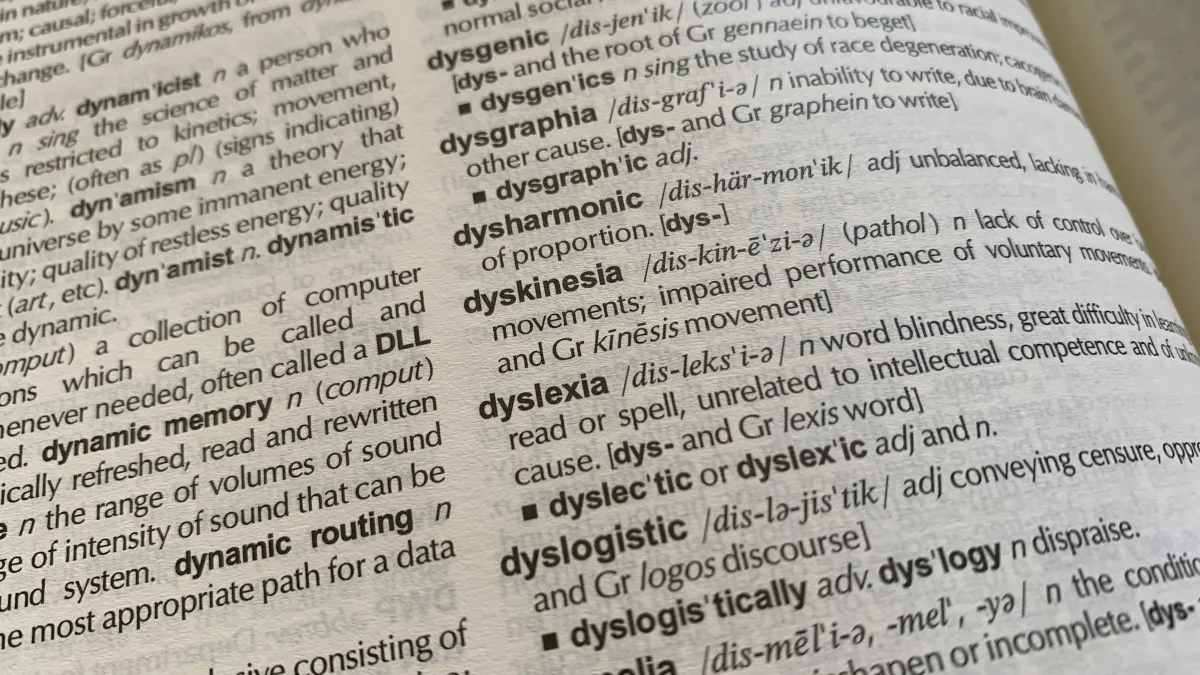
Your Child's Dyslexia Screening Was 'Negative'—Now What?
Negative dyslexia screening doesn't mean your child doesn't have dyslexia. Learn your rights in Texas and how to request a full evaluation.